I have just completed a report on a small domestic heating trial (12 households) which we ran here in rural Wales during January and February. Our aim was to explore a way that households could reduce the energy consumption of oil or LPG powered central heating and improve occupants’ thermal comfort by introducing simple, supplementary, conductive and radiant IR ‘spot heating’ devices which focus on heating people rather than space. The experiment affected both behaviour and thinking and shed new light on what it means to keep warm. The results point to possible techniques for reducing household energy whilst improving thermal comfort – particularly in older, poorly insulated housing which is unlikely to be adequately fixed for some while.
Domestic Heat Trial in Rural Wales
What do portraits say?
Great project with Larks and Ravens working with Brecon Beacons College students creating alternative stories and portraits in response to the historical figures which dominate the Victorian Courtroom at y Gaer Museum in Brecon. Exhibition open to the public from March 24th until April 5th.
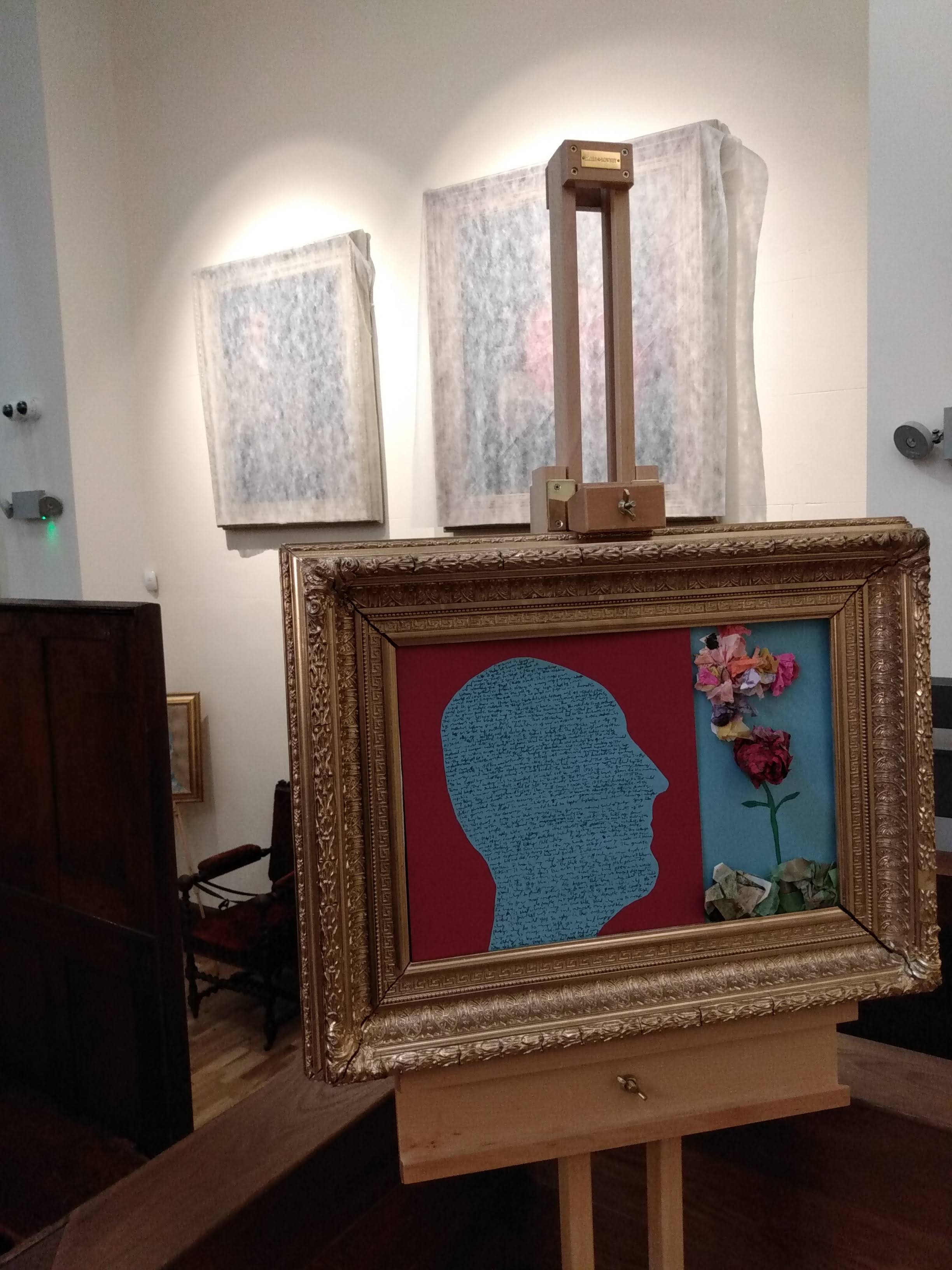
We find the Courtroom a rich space of symbols of power, justice, equality and patriarchy which are interesting for artists (and this irrational psychologist!) to explore and challenge.
Not all experiments work….
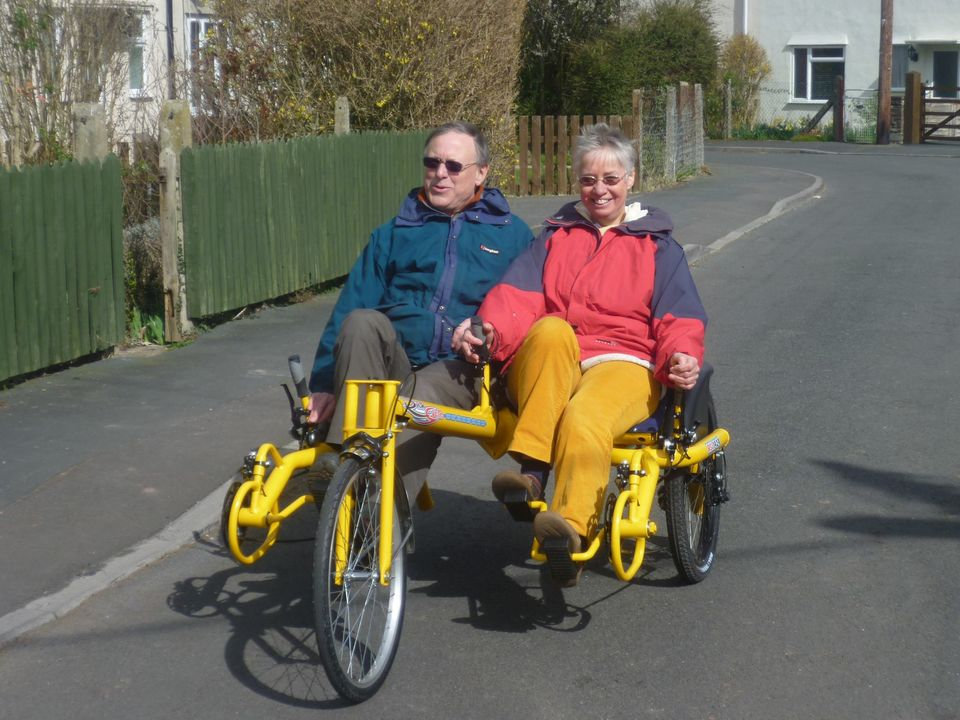
10 years ago today – experimenting with a different form of lightweight local travel. Decided, on encountering the first hill that it needed battery assist and a better weighted front wheel or it alarmingly came off the ground on any slope or fast turn. But we survived and had a lot of fun.
Latest ‘I’ve got an Idea’ Fund Award – Pigfoot Theatre
We are delighted to announce our first award of 2022 to the Pigfoot Theatre team for their energy-harvesting dancefloor project which will convert performers’ live footsteps into electricity to power their shows’ lighting.
Pigfoot Theatre is a carbon-neutral theatre company, dedicated to making collaborative, sustainable theatre about the climate & ecological crisis.
Their idea is to build an energy-harvesting dancefloor made up of tiles which convert performers’ live footsteps into electricity to power their shows’ lighting. The floor will generate
more power than the bicycle powered-generators (which they have been using) for less physical effort (a footstep, rather than pedaling). A small number of such dance floors exist but are very expensive to hire. Pigfoot’s goal is to create a set up which is highly modular and can be easily transported and installed without the cost of involving specialist technicians. This means other small theatres like theirs could afford to hire and use the tiles.
The idea of using a dancefloor to generate power echoes the main message of Pigfoot’s work. As Bea, their Director, explains “One person moving or dancing generates a small amount of energy, while a group of people moving together generates so much more. In much the same way, individual actions have a small impact in reducing carbon emissions, but collective action – or many people taking the same action – can create a significant, tangible shift in how our society
operates.”
Pigfoot team engineer, Jack, has so far created 3 prototype tiles with incorporated battery storage which they have tested successfully in one performance. They now want to experiment whether they can innovate a more efficient method of energy generation.

Pigfoot has already started developing one show, HOT IN HERE (a carbon-neutral dance-party), which will use the dancefloor. This show will hopefully tour in Autumn 2022, meaning that the dancefloor would be shared with over 4,000+ public audiences and participants in 12 localities across England and Wales.
We really liked Pigfoot’s idea and their team’s experimental approach to developing and testing ways of realising it fits the spirit of our fund. We look forward to a chance to experience dancing on their tiles at some point.
Domestic Heat Trial starts in rural Wales

In partnership with Talybont on Usk Energy, I am running a small trial here in rural Wales to explore a different way of thinking about domestic heat energy and thermal comfort. The trial switches focus from heating entire spaces to heating our bodies directly – hopefully keeping us warmer but using less energy – particularly energy generated by fossil fuels.
Central Heating has created a mindset that keeping ourselves warm requires keeping the entire air space in our homes to a constant temperature (18-20 degs or more) even though air at that temperature doesn’t actually heat us but simply stops us losing body heat. Air space heating is also very vulnerable to any draughts, high ceilings or poor insulation.
Yesterday, I installed the trial equipment in the first 4 of our 12 volunteer households. The houses range in age from the 1700’s (!) to 2003. 9 have oil or LPG Central Heating and 3 have electric radiators only. I am also now including (on an ad hoc basis) a cottage with a recently installed air source heat pump which is struggling to heat the property above 18 degs so needs some auxiliarly form of person centred heating when the resident is just sitting.
The trial equipment consists of:-
- A 500w Infrared panel – which propagates heat waves in the same way as radiation from the sun, an Aga or a log burner – it doesn’t heat the air directly but heats objects with thermal mass like people, furniture or walls. The objects absorb the heat and then radiate that back to warm the surrounding air.
- A 60w electrically heated seat cover which heats through conduction.
- A battery heated gilet which uses a 36Wh portable power battery kept in a pocket.

Originally I planned to ask the participants to turn their Central Heating down by a couple of degrees for the period of the trial but quickly realised this wasn’t a good idea as several were already feeling chilly at times. Instead they are invited to experiment with the 3 different forms of person-centred heat and see what difference that makes to how warm they feel and how it compares to their normal heating regimes. I will be pinging them from time to time to collect ‘in the moment’ perceptions on their thermal comfort as related to their current context and activity.
I am collecting pre and post trial energy consumption data and logging the kWh used by the Infrared panels. But, given the difficulty in measuring oil use (no meter) together with wildly varying outside temperatures, the trial will not provide very useful quantitative data but it will provide really useful qualitative data to guide thinking and possibly further studies.
The first 4 participants will have the equipment for a fortnight before I conduct post-trial interviews and the equipment gets transferred to the next 4 households.
You can read a fuller background on the thinking behind the trial here.
Update on ‘Idea Fund’ project – Dawn Chorus
Great to hear this week from Nic & Swen that, having overcome a whole raft of technical (and other issues), they have finally got their website up and running offering us a ‘dawn chorus of the day’ recorded every single day where they live in an ancient mixed tree woodland near Truro in Cornwall.
Helped by their ‘I’ve got an idea’ fund award, they are now well on their way of achieving their project goals:
- Recordings of bird songs that members of the public can download from a website in order to help their well-being and mental health
- Establish a long running citizen science project providing quality data to researchers for future reference and work on bird studies
- Creation of a record over time of changes in bird population in certain localities in Cornwall to track the impact of climate change and the deepening ecological emergency
Having worked on many technology trials myself, I know well that there are always endless unanticipated problems but the Idea Fund is about people finding imaginative DIY approaches to overcoming the hurdles to achieve their idea – and having fun in the process. Well done Nic and Swen and the birds! At least they will no longer have to get up at unearthly hours in the summer to do the recordings manually.
The ‘I’ve got an idea’ fund is currently open for applications
Update on ‘Idea Fund’ Project : Sound Gadgets
Delighted to receive an update from ‘I’ve got an Idea Fund’ award winner Lee Holder’s ‘Sound Gadgets’ project.
Lee is experimenting with a combination of 3D printing and motion, touch, light and distance sensors to prototype customised interfaces for young people with disabilities to create their own music at home. Their feedback will then enable Lee to make further adaptations and improvements. As well as opening music making to a wider number of people with disabilities, The Music Works hopes ‘Sound Gadgets’ can provide instrument blueprints, code and building information to other organisations in the UK.
What a brilliant project…
COP-26 Art Installation – The Planet’s Case of Abuse
With my alternative Larks&Ravens hat on, I’ve been working with my 2 artist colleagues to create an installation in the old Victorian Courtroom in Brecon to trigger conversation around climate change.

What would happen if the Planet brought a case of abuse to the Court?

Sizzling & Shaking : 2 new ‘I’ve got an idea’ Fund Awards
In selecting these latest award winners from the many fascinating applications we receive, we’ve again chosen to fund ideas which are DIY based where individuals or groups are building and testing their technical ideas themselves rather than outsourcing the development to a specialist company. This means that we can fund more projects with the limited money we have available as outsourcing software, hardware or content development tends to eat up anyone’s funds fast.
But the main reason is that we know, from our own experience, that building the idea yourself is more fun and the best way of evolving it, gaining new knowledge and skills and learning what works and doesn’t work. Having fun collaborating and experimenting through hands on doing is where the spirit of this particular fund lies.
The Fund is still open until the current pot runs dry.
Portable Solar BBQ
Victor Galadimawa is a Mechanical Engineer with a Masters degree in Thermal Power. His idea is to use optic filters combined with an Infrared emitter to construct a high-power, fast cooking, solar powered barbecue grill which is compact and portable enough to replace the current single use, charcoal grills. The latter have become very popular. They are often left littering the countryside and causing fires and the charcoal they use is often sourced from Africa.
Victor’s idea is that “the total incident solar flux into my solar barbecue grill’s concentrator is first concentrated and then converted into heat in a collector. This heat is then converted by an integrated infrared emitter in the grill assembly into infrared radiation suitable for grilling.”
The benefit of Infrared is that it penetrates the food and heats it more quickly and effectively.
Victor will use his Idea Fund award to purchase environmentally safe and biodegradable components and 100% recyclable materials required for this prototyping phase.
His solar thermal experimentation will be both challenging and fun and we wish Victor every success with his potential product and, hopefully, some great tasting BBQ sausages to enjoy at some point.
Biodegradable, bee friendly, percussion eggs
Christian Blackmore-Wynn is a Design Teacher who also sings and plays in the band The Legendary Snake Snake Snake. As they have no drummer, the band hand out percussion eggs (like the colourful ones you get in primary schools, etc) to the audience who then become the rhythm section of the band. Christian says it works really well as interactive,
audience participation but they are concerned over the number of percussion eggs they give out which end up discarded.
Current percussion eggs are either made of a polymer or wood which has been coated in a varnish and are filled with small metal beads. Neither option is environmentally friendly nor sustainable. They are sold in the hundreds of thousands globally every year to schools, colleges, bands and promotional events. Christian says they are rarely used more than a few times and are not recycled or have any other use. They go into landfill.
Christain will use the award to experiment with creating outer percussion shells from recycled paper and card pulp or from food waste such as orange peel or ground coffee with wildflower seeds mixed into it. He then wants to explore if the important ‘percussion’ noise inside the shape could be be produced by larger wild flower seeds. This will need exploring to discover which combination and size of seeds gives the best and most authentic sound.
Through his job, Christian tries to inspire his students and spark their
creative juices so is keen to involve them where possible in the experimentation and design.
The Idea Fund award will cover the cost of a range of pulp producing equipment, grinders and blenders, moulds of varying shapes and sizes, drying racks, wild seeds, producing test examples. Material research into a range of natural and biodegradable pulps. Research into manufacturing techniques to include tradition mould making but also modern applications such as 3D printing. Making or purchasing a Dehydrator for food peelings and ground coffee. Making or purchasing a hydraulic press machine once a successful mould and process has been established.
We wish Christian, his band and his students every success with this endeavour. It will certainly involve plenty of problem solving, experimentation and fun and hopefully some great new sounds and later maybe wildflowers in unexpected places for the bees.
Enabling young people with disabilities to make their own music
On Friday, I visited Lee Holder at The Music Works charity in Gloucester. Lee won one of our ‘I’ve got an idea fund‘ awards at the end of last year. His idea is to use 3D printing and one-on-one experimentation to individualise manual interfaces for severely disabled young people to make their own music.
Lee now has a fabulous new sensory studio at Music Works and he showed me (and even better allowed me to try!) a range of different digital interfaces (see some below). Some of these will work for his students as they are. Others will need major or minor resdesigning or repackaging to work effectively for the particular challenges of each of his young collaborators. That is where the customised design and 3D printing will come into its own.
It was fascinating to experience creating sounds and beats in such different ways .. moving my hands in the air in front of a sensor, pressing and sliding my fingers across different receptive surfaces and manipulating joy sticks. I even tried lying on a specially designed water bed, covering my ears and ‘hearing’ music through the patterns of physical vibration of the water beneath me. The latter is specifically designed for deaf people but people with autism enjoy it too. I certainly would have happily spent an hour or more lying there.


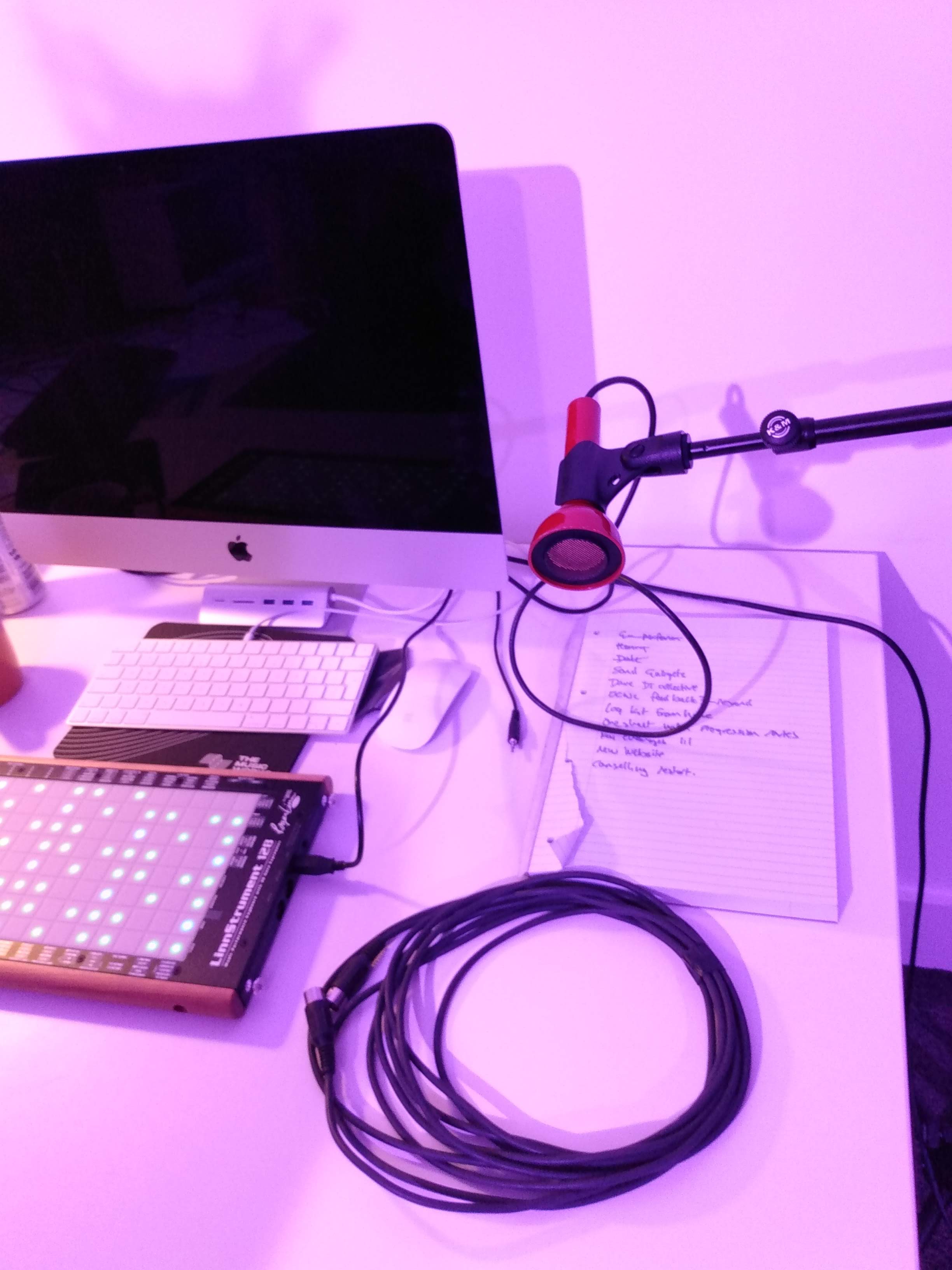
I’m excited that our small fund has enabled Lee to get this experimental project to start happening.

