Our latest award is to Natalie Smith who works in food education and sustainability in Inverness via her project Seed2Plate. While training Home Economics in schools, she noticed how many usable scraps of vegetable waste were going straight into the bin with nowhere else to go. Natalie started bringing some of it home, thinking she could make something to feed her own vegetable plants especially if it might also solve her watering problems. She couldn’t find any commercial products which provided both water and nutrients, it was usually one or the other.
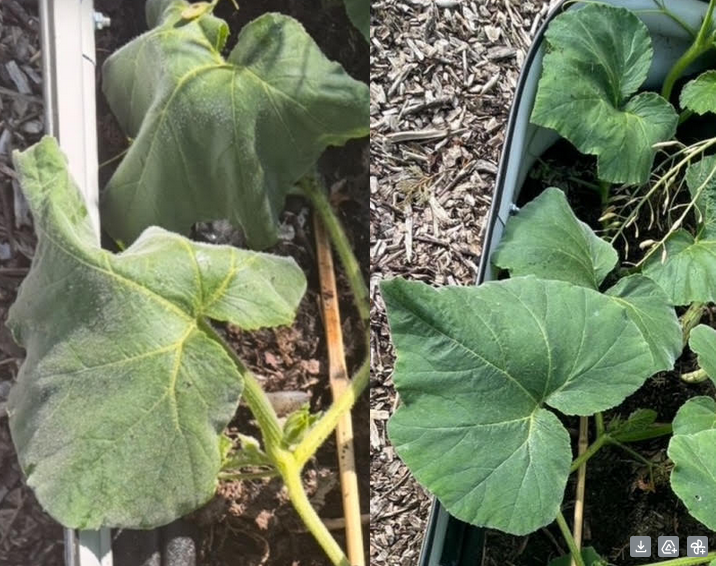
So, Natalie began her own experiments using natural extracts and gelling agents with different nutrient teas that she had brewed from food waste and garden by-products, She cast a rough prototype: a biodegradable sheet that could hold moisture, release nutrients gradually, and compost harmlessly back into the soil. In just a six week quick stress test window, the results exceeded expectations. Plants with the sheets stayed moist for days, if not weeks, longer than controls with minimal watering. In hanging basket trials, plants thrived with around 70% less water. Most surprisingly, a squash plant struggling with powdery mildew (usually only managed by cutting back, spraying or discarding) actually recovered and put on fresh growth in less than 48 hours without a single leaf needing to be cut off.
Our ‘I’ve got an idea fund’ award will help Natalie now extend her DIY experiments: assessing the effectiveness of different blends of food waste teas as well as vacuum-packing the sheets for stabilisation to see for how long they stay usable.

As Natalie says, “while the basic idea of a sheet to hold water may exist in other forms, this is rarely if ever applied in horticulture this way nor is the concept of the ability to infuse them for different requirements, whether that’s for nutrition, recovery, or even pest deterrence and that is what I hope would make Plant Powered Sheets unique”.
As readers may have noticed, the ‘I’ve got an idea’ fund team is particularly drawn to DIY experimentation by applicants – not only because it’s a great way to test and evolve an idea but also because hands-on experimentation is fun and provides valuable learning even if the original idea doesn’t work.
Good Luck Natalie!

 The Prospectory